
By Jon W. Sparks – Memphis Magazine
July 2, 2024
The headquarters of the Hospitality Hub sits on Washington Avenue heading toward Downtown, on the former site of a motor vehicle inspection station.
Inside, the space is active and purpose-driven, as staff, volunteers, and unhoused individuals connect with services and support. While the building serves as a central hub, the organization’s work extends across Memphis through a network of housing options tailored to different needs. These include the Hub Hotel for women, Hub Hall for young adults, and Hub Studios, which serve individuals and families who often fall through traditional housing gaps — including couples, families with older children, and those dealing with severe PTSD.
The Hub also operates a Street Outreach team that meets people where they are, whether in parks, underpasses, or abandoned buildings.
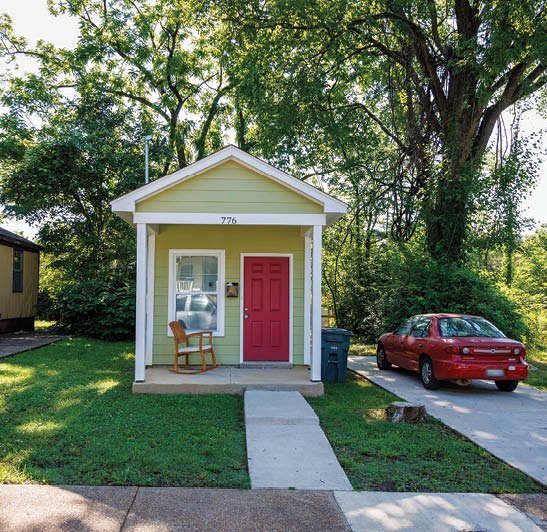
Among its housing solutions, the organization has turned to small-scale units known as Hub Studios — a form of tiny housing that provides shelter, privacy, and safety while remaining cost-effective.
Tiny homes have grown in popularity for their flexibility and affordability, though their use in Memphis is often tied to nonprofit efforts to house those in need. Local regulations around accessory dwelling units and utility connections can limit broader adoption, but organizations have found ways to adapt the model.
Groups such as Hospitality Hub, Homes for Hearts, and My Sistah’s House are using small homes in different ways — from emergency shelter to transitional and longer-term housing.
Hospitality Hub, founded in 2007 by the Downtown Churches Association, has focused on creating housing solutions that address real-world barriers. Executive director Kelcey Johnson said the organization does not view these units as permanent housing, but rather as non-congregate shelter.
“For us, these structures — which we call Hub Studios — allow people to stay by themselves or with family members while they transition to permanent housing,” Johnson said.
The model allows families and couples to remain together, addressing a major limitation in traditional shelters, which often separate individuals.
The organization is planning a Hub Village development that would include about 20 studios and larger cottages, along with shared kitchen, bathroom, and laundry facilities. The community would also offer on-site case management and support services aimed at helping residents transition to stable housing.
Johnson emphasized that traditional shelter models can be counterproductive, often requiring residents to leave during the day without resources or support.
The Hub’s approach focuses on stability and long-term outcomes, offering services such as job placement, financial planning, and life skills training. “Income is the way out of homelessness,” Johnson said.
The concept for the small housing units evolved through collaboration with Jarad Bingham of Dragonfly Collective. While early ideas included repurposing shipping containers, local regulations made that approach unfeasible. Instead, the team developed small homes that meet code requirements, with initial units constructed locally.
The nonprofit is funded through a mix of public and private sources, including local governments, churches, and foundations.
While Hub Village has secured funding, finding a location has proven challenging. A proposed site in Raleigh faced opposition from residents concerned about the impact on their neighborhood.
Despite those challenges, Johnson said the organization has seen strong results, with about 91% of participants successfully transitioning to housing and maintaining stability.
The work continues on an individual level.
“Everybody’s story is different,” Johnson said. “There’s no one-size-fits-all solution.”