
By Kelundra Smith – Garden & Gun
November 2024
By the time Martin Luther King Jr. arrived in Memphis in the spring of 1968, city sanitation workers had been on strike for more than a month. After two workers were killed in a faulty garbage truck, the mostly Black workforce organized at Clayborn Temple, which became the movement’s central gathering place.
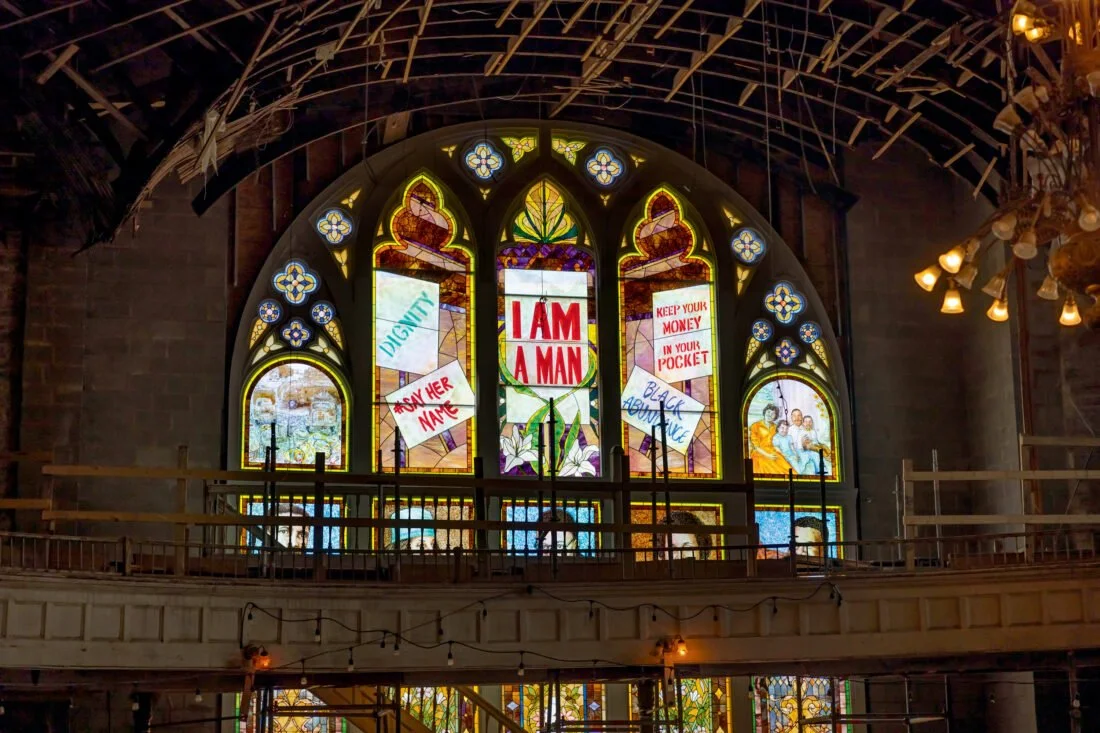
Today, that history is being memorialized in a new way. Scenes from the strike are now depicted in newly designed and installed stained-glass windows at the historic church — part of a larger, multiyear effort to restore and reopen Clayborn Temple as a community space.
When the project is complete, the building will function as a cultural arts center focused on storytelling, performance, and community engagement, according to executive director Anasa Troutman.
Originally built in 1892 as a Presbyterian church, the Romanesque Revival structure was sold to an African Methodist Episcopal congregation in 1949 and became a cornerstone of Memphis’ Black community. It remained active until 1999, when declining membership and mounting repair costs forced it to close.
Efforts to restore the building gained traction in the mid-2010s, though not without challenges. After a major donor withdrew support and pushed for a sale of the property, Troutman led an effort to raise funds to purchase the building and begin renovations.
Restoration work now includes repairs to the church’s exterior and the ongoing rehabilitation of its pipe organ. The project is being designed by Memphis-based Self + Tucker Architects. When complete, the facility will include a theater, meeting rooms, event spaces, and upgraded lighting and sound systems, with a targeted reopening in 2026.
A key feature of the renovation is the stained-glass installation. During the 1968 strike, the church’s original windows were damaged by tear gas. Some have been restored, while new windows now depict scenes from the movement.
Artists Sharday Michelle and Lonnie Robinson were selected to design the new pieces. Robinson’s work includes depictions of the sanitation workers’ march as well as portraits of key figures such as Larry Payne, T.O. Jones, and other civil rights leaders.
For Robinson, the project carries personal significance, as his family had connections to the neighborhood during the time of the strike.
“Being able to honor the people who did the work locally gives them a lasting legacy,” he said. “Stained glass endures — it ensures their stories are remembered.”
With its restoration underway, Clayborn Temple is poised to once again serve as a powerful symbol of Memphis history and a gathering place for future generations.