
By Joe Sills – Forbes
January 17, 2026
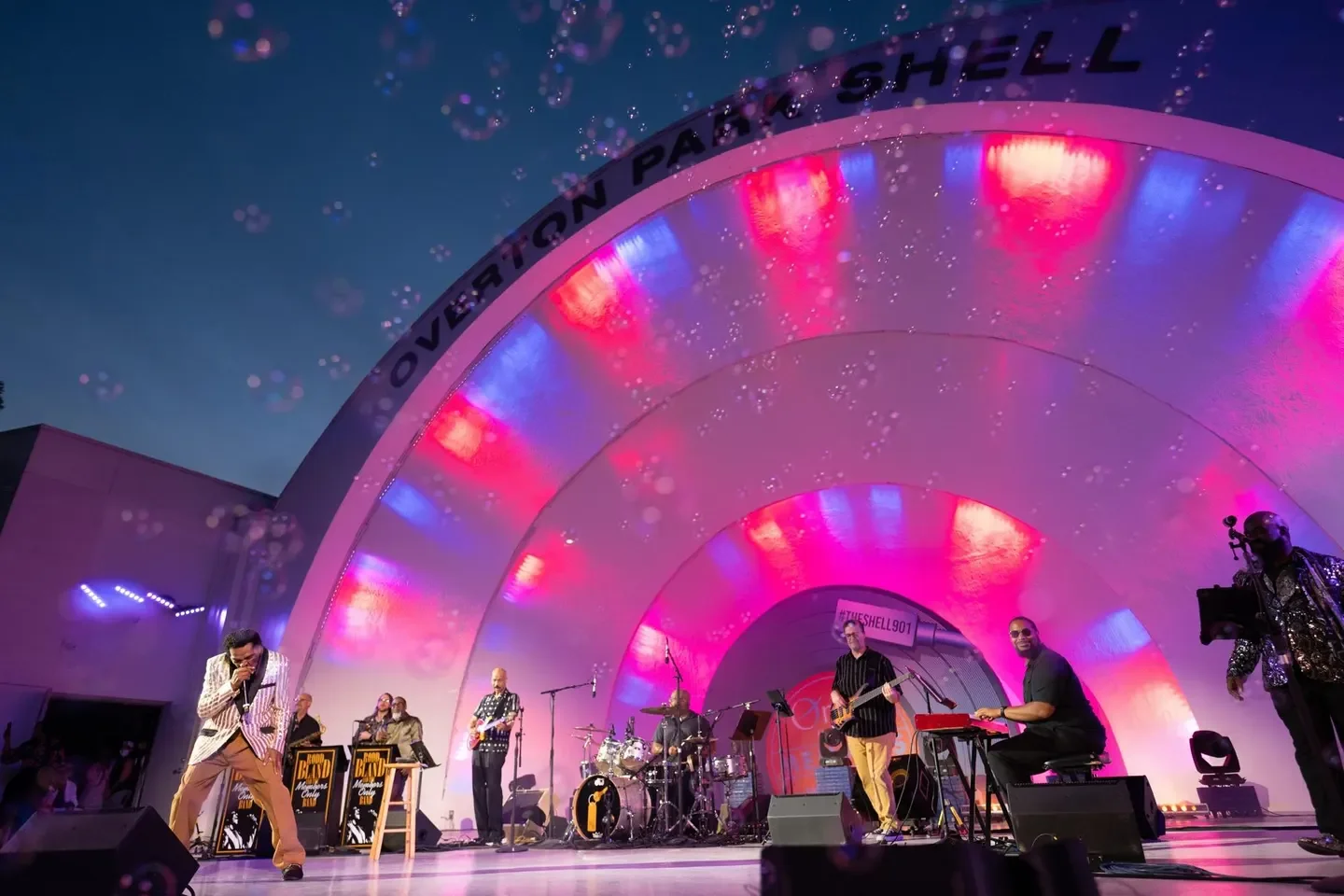
Pink pants shivered beneath tulip poplar trees around the Overton Park Shell on July 30, 1954. In the middle of a Memphis city park, Elvis Presley stepped onto the stage at an event billed as the Hillbilly Hoedown. For the first time in his life, he was about to be paid to sing. The 19-year-old Humes High School graduate with styled jet-black hair was wildly nervous — almost nobody in the crowd had come to hear his voice.
Presley was booked as a warm-up act for established country star Slim Whitman. Whitman’s howling yodel and clean-cut persona were a far cry from the sound Presley had been rehearsing. One sound belonged 200 miles away at the Grand Ole Opry. Another belonged five miles away on Beale Street. Presley didn’t even have an album yet — just a single and a B-side recorded less than two weeks before the show.
“There might have been a smattering of people there that had heard Elvis on the radio,” said Overton Park Shell content and archives manager Cole Early. “But this is really the first time for him to play in public. He was still somewhat unsure of himself, and all of a sudden he’s up on stage in front of 5,000 people.”
Presley launched into “That’s All Right, Mama,” a lean, driving rock ’n’ roll song built on the blues. “He would do this nervous shaking thing with his hips to keep time in the studio,” Early added. “Well, Elvis was super nervous, so he really shook those pink pants.”
Presley’s movements were eye-level with the country music crowd. Pandemonium followed.
A meteoric musical rise
Fellow Sun Studio artist Ike Turner had recorded a rock ’n’ roll hit years earlier with “Rocket 88.” But Presley, a young transplant from Tupelo, Mississippi, had just ignited something new. He carried Black music from the segregated South to wider audiences, blending it with his stage presence to launch both himself and Memphis into music history.
Almost overnight, Memphis evolved into a culture-shaping hub of creative energy. Artists like Johnny Cash, Jerry Lee Lewis, and Carl Perkins followed in the wake of blues legends such as B.B. King, Junior Parker, and Howlin’ Wolf — all tracing roots back to W.C. Handy, the “Father of the Blues,” who settled on Beale Street in the early 1900s.
Within a decade, Sun Records’ rockabilly and blues output was joined by soul and R&B powerhouses at Stax, American Sound Studio, and Hi Records. Otis Redding, Isaac Hayes, Booker T. and the M.G.’s, and many others cemented Memphis’ legacy. Even after industry shifts to Nashville and Atlanta, Memphis continued producing influential music across genres into the 1990s and 2000s.
A legacy that still resonates
Today, Memphis remains a music city defined by authenticity. While Elvis’ legacy looms large, generations of artists — from Tina Turner to Justin Timberlake, Young Dolph, and GloRilla — have carried the torch.
Yet the live music scene has long lacked the infrastructure to match its recording legacy.
As the Overton Park Shell celebrates its 90th anniversary, Memphis is pushing toward a live music resurgence. The Shell’s free concert series continues to spotlight local talent, while a mobile “Shell on Wheels” brings performances to underserved neighborhoods like North Memphis, South Memphis, and Orange Mound.
“We want to feature not just blues, but hip-hop, R&B, and artists from diverse communities,” said Shelby Smith of the Overton Park Shell. “Memphis is more than 60% Black, and we want our stages to reflect that.”
New venues, new opportunities
Two new venues are set to expand Memphis’ live music footprint. A 30,000-square-foot music hall is scheduled to open near the Shell, while the 4,500-seat Grind City Amphitheater will anchor development in Uptown.
These additions aim to address a long-standing gap: Memphis lacks mid-sized venues between smaller clubs and large arenas. As a result, national tours often bypass the city.
According to Memphis Tourism, 85% of the city’s 13 million annual visitors experience music. Still, Memphis has struggled to reclaim its place as a major live music destination.
Some of that challenge stems from perception. Despite declining crime rates, national narratives can shape how outsiders view the city, affecting tourism and live events.
Music in every corner
Despite these challenges, Memphis’ music scene remains deeply alive.
Local promoters track dozens of live shows each week across venues ranging from coffee shops to clubs. Beale Street still pulses with blues. Hip-hop and R&B thrive across neighborhoods. Indie rock echoes through Midtown.
Festivals like Mempho Music Fest and Riverbeat are helping bring national acts back to the riverfront, drawing tens of thousands of attendees and signaling renewed momentum.
Where music lives
On any given night, Memphis music exists beyond big venues.
At a small South Memphis bar, a surprise performance by a major band unfolds in a room of just a few dozen people. There’s no stage, no spectacle — just raw connection.
Truck drivers, musicians, and locals gather under dim lights, sharing stories, drinks, and songs. It’s a reminder that Memphis’ power isn’t just in its history — it’s in its everyday culture.
“People say Memphis punches above its weight,” said DJ and radio host Jared Boyd. “We find a way to captivate people.”
A future built on sound
At Crosstown Concourse, the Memphis Listening Lab preserves the city’s sonic history — tens of thousands of records and artifacts available to the public. At the same time, a new wave of artists is pushing boundaries, especially in electronic music.
“The scene here is accelerating,” said curator Chad Weekley. “It’s the best I’ve seen it in decades.”
Memphis stands at a crossroads — a city with unmatched musical roots and a renewed push toward the future.
“There are still challenges,” Weekley said. “But artists keep coming back for a reason.”
They know Memphis is real.