The Front Porch was conceived as more than a building. It was envisioned as a place where architecture actively supports community life. Designed to foster connection through everyday interactions, the project creates an environment that feels open, welcoming, and accessible, encouraging people from all backgrounds to gather, engage, and share in a common space.
The project originated from a vision within the Second Baptist Church congregation to deepen engagement with the surrounding community. To support this broader mission, four acres of the church’s centrally located, wooded campus were dedicated to a newly established nonprofit foundation, creating a distinct identity and purpose for the facility. From early planning through completion, the project was shaped by collaboration among stakeholders, ensuring the building could serve diverse needs while remaining adaptable for the future.
A defining component of The Front Porch is its role as home to Mila’s House, created in partnership with the Baptiste Center for Good Grief. Named in memory of 6-year-old Milla Gieselmann, the space provides free grief counseling services for individuals and families, extending the project’s impact beyond the physical space into meaningful care and support.
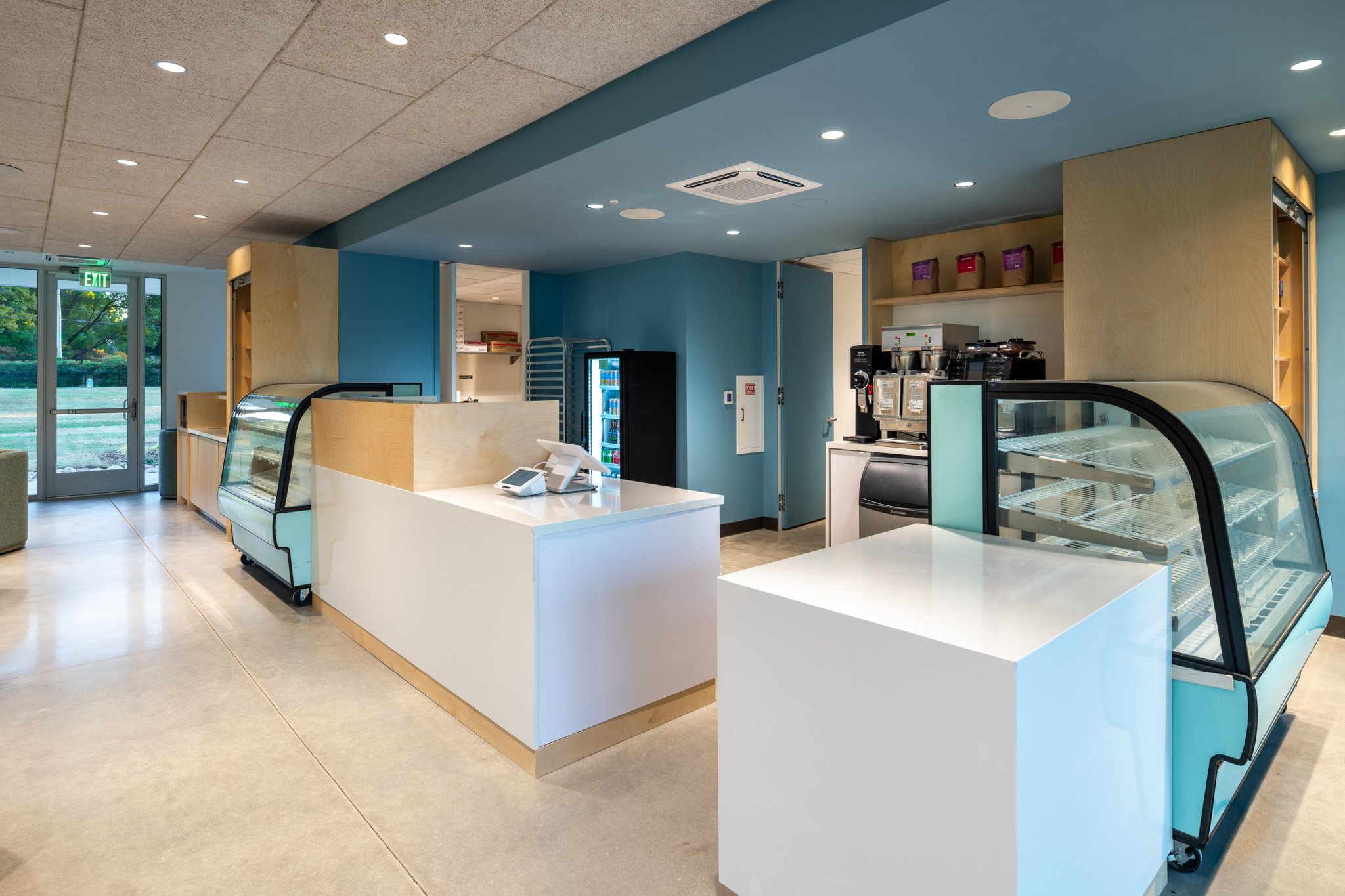
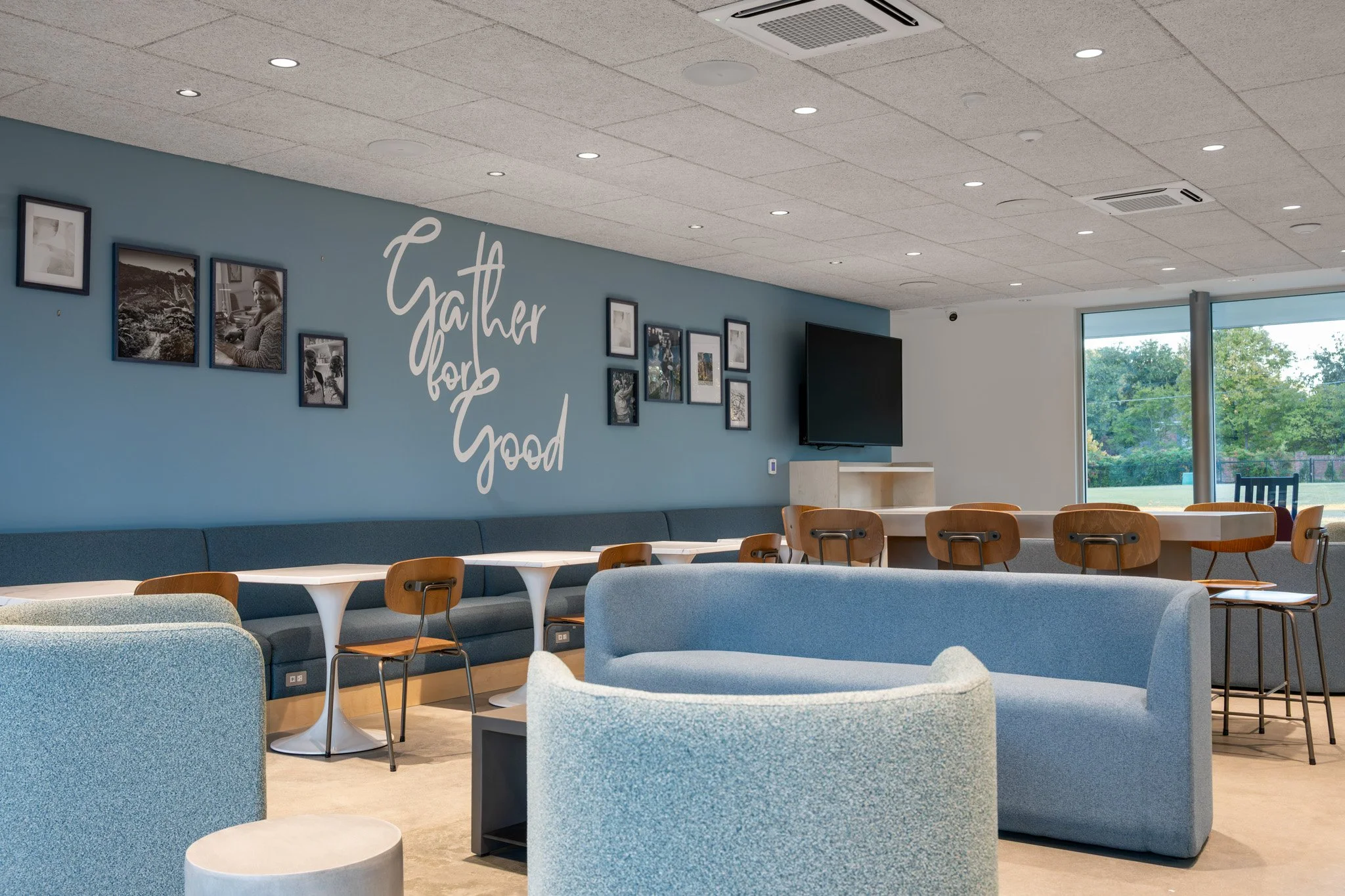
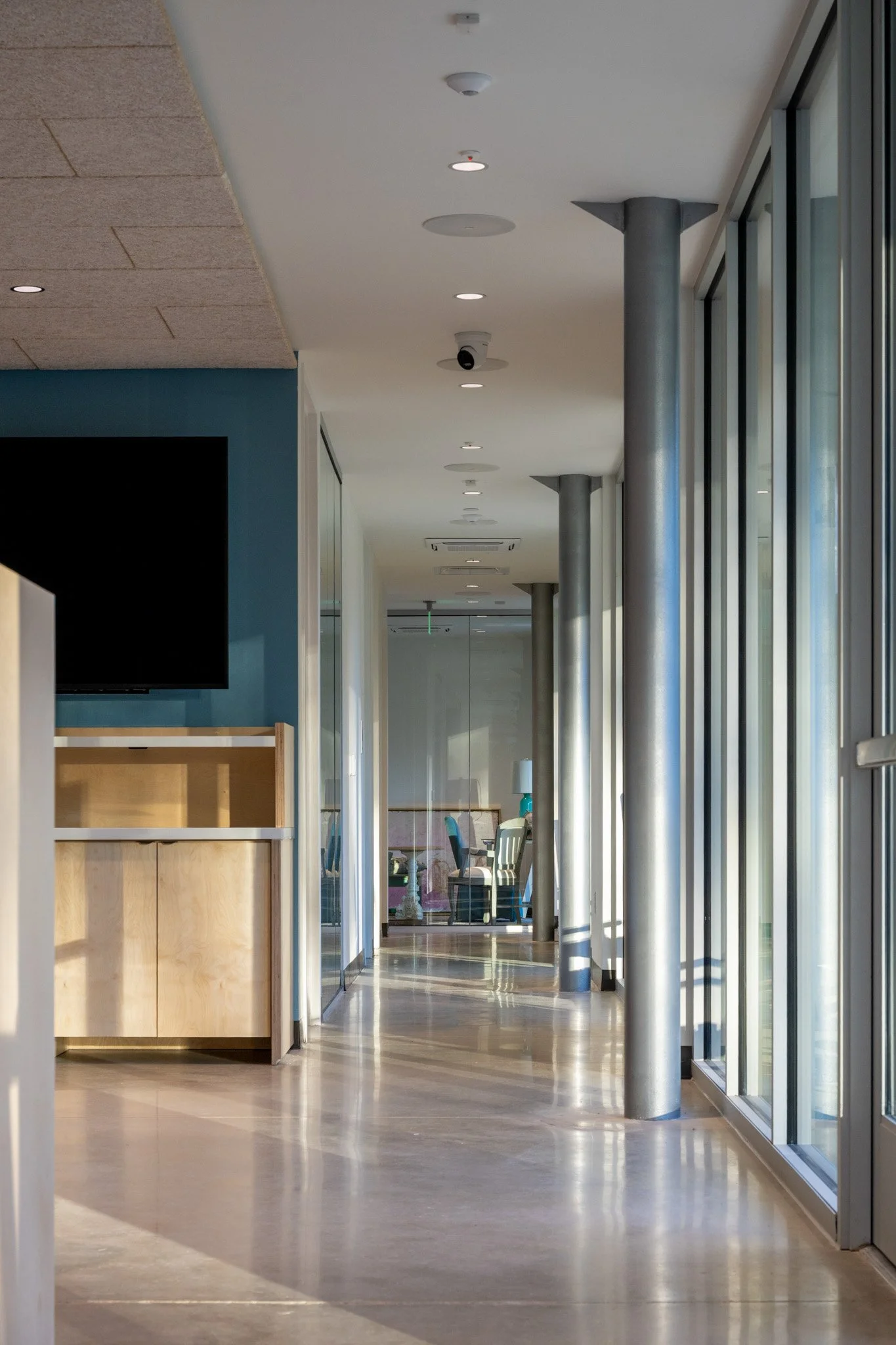
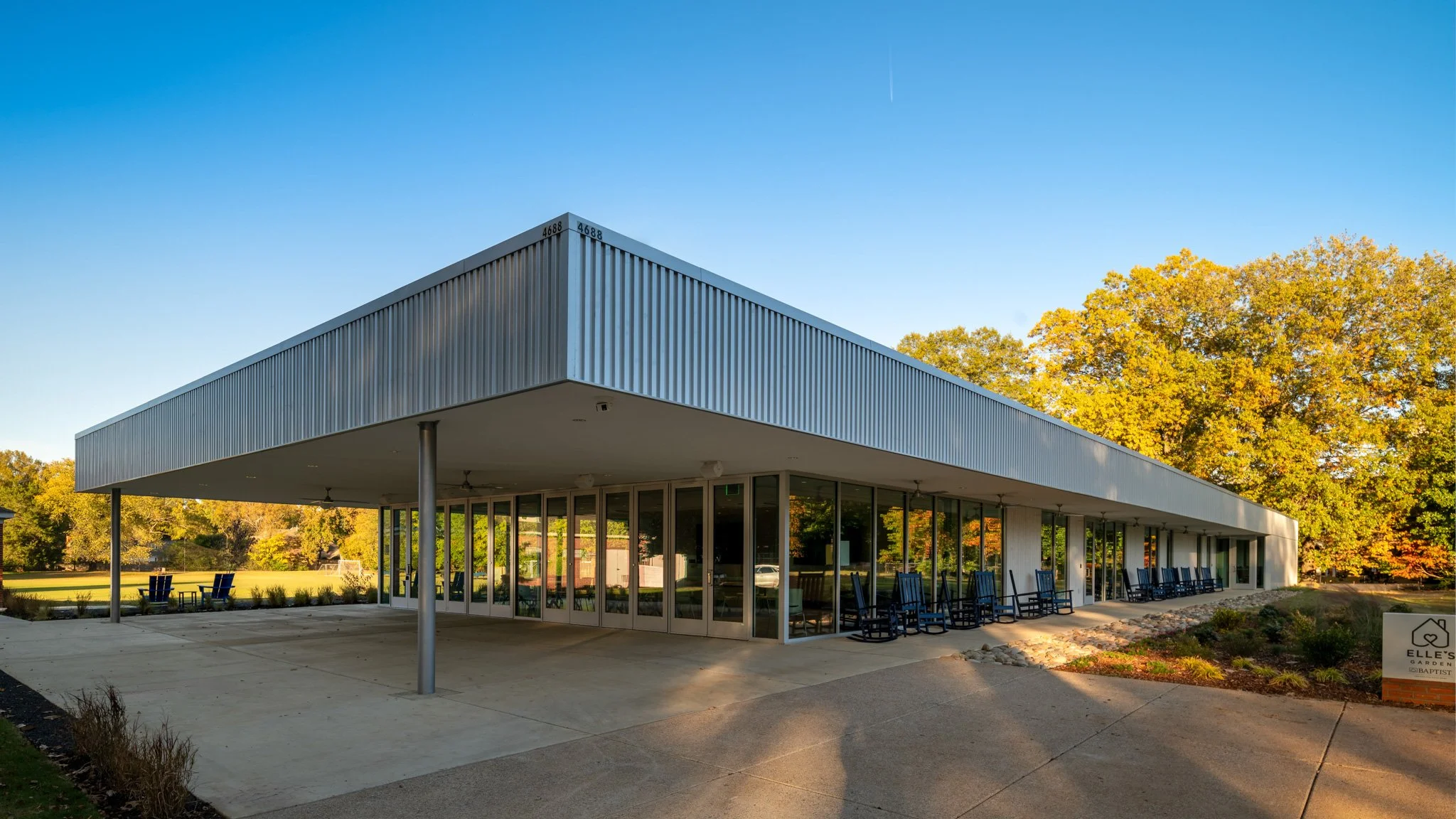
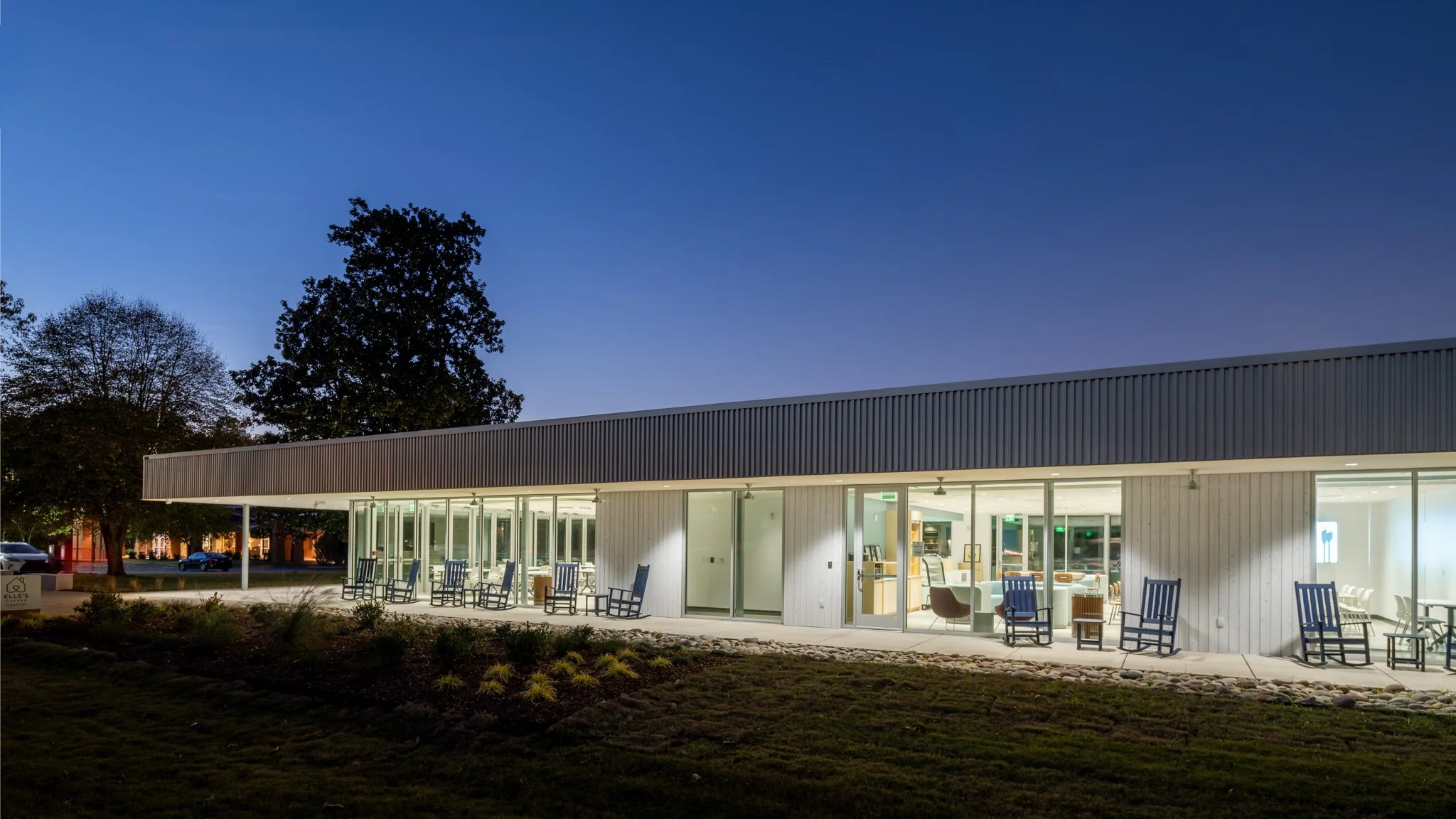
Architecturally, the building is designed to encourage interaction while maintaining a strong connection to its natural surroundings. A defining feature is the expansive porch that wraps three sides of the structure, extending usable space outdoors and creating sheltered areas for gathering throughout the year. The building’s horizontal profile and extended canopy respond to the scale of the surrounding neighborhood, reinforcing a sense of continuity with the existing landscape.
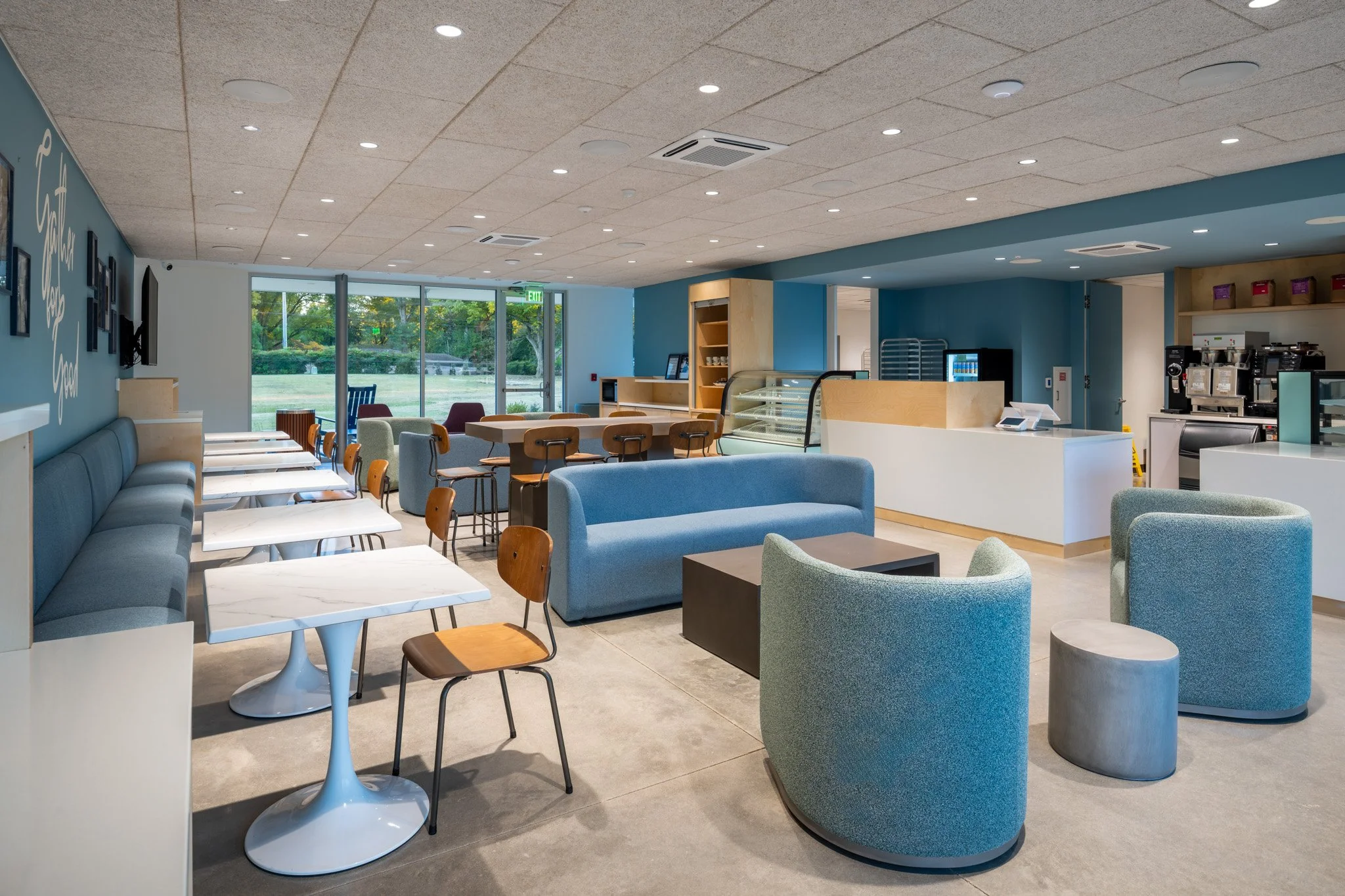
Inside, the layout promotes movement, visibility, and connection. Circulation paths run alongside outdoor gathering areas, while public spaces transition naturally into quieter, more private rooms. Generous glazing frames views of the wooded campus, strengthening the relationship between interior activity and the environment beyond.
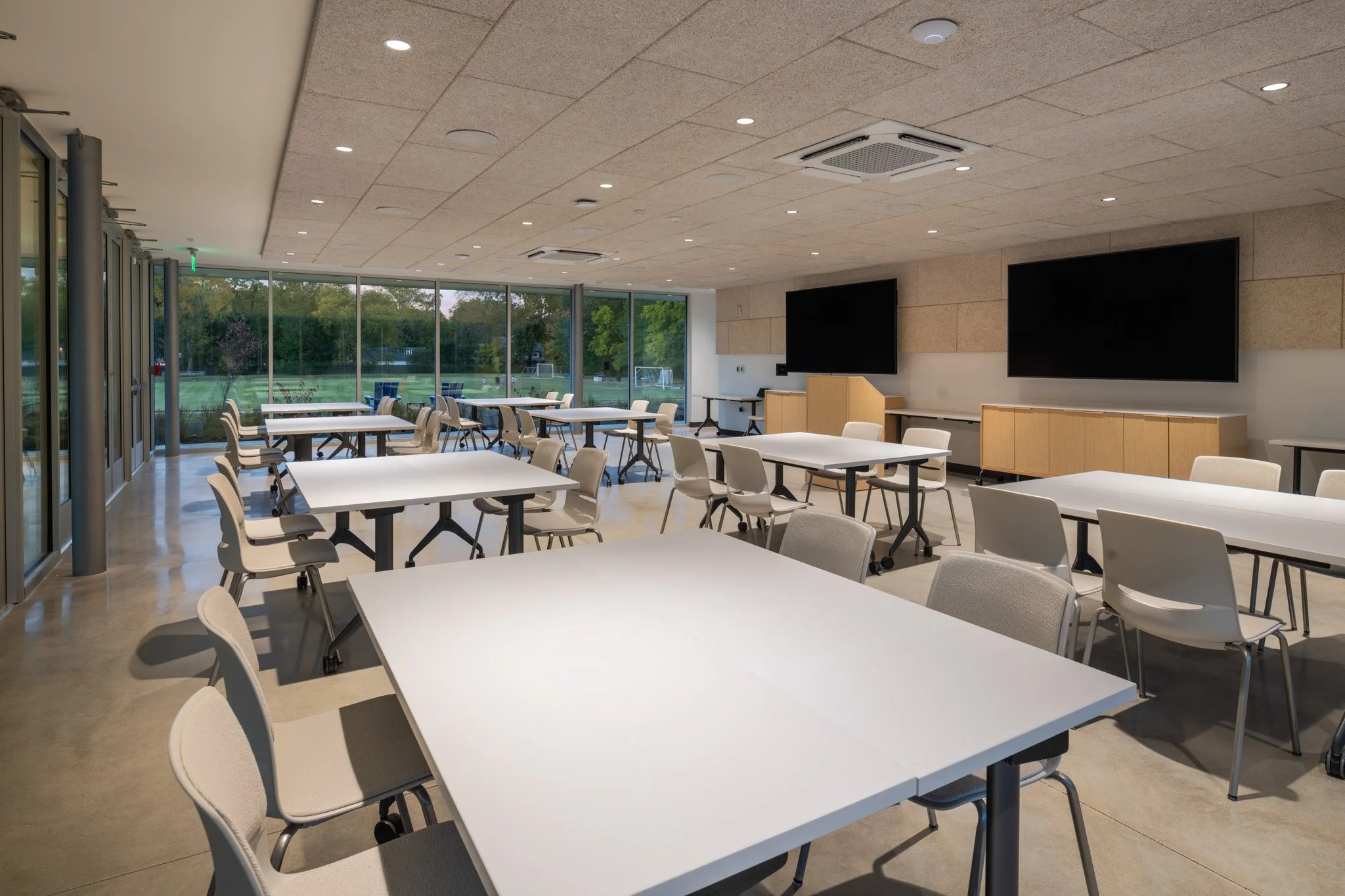
The Front Porch serves as a lasting community asset by bringing together a variety of uses under one roof, including a café, event space, counseling services, and coworking offices. This mix of programming encourages interaction across different groups while maintaining a welcoming and inclusive atmosphere. A locally operated coffee shop further establishes the building as an everyday destination, inviting both planned and spontaneous use.
Through thoughtful design and intentional programming, The Front Porch transforms previously private land into a shared civic resource. It demonstrates how the built environment can strengthen connections, support wellbeing, and create meaningful opportunities for community engagement.
Joe Luther, photography